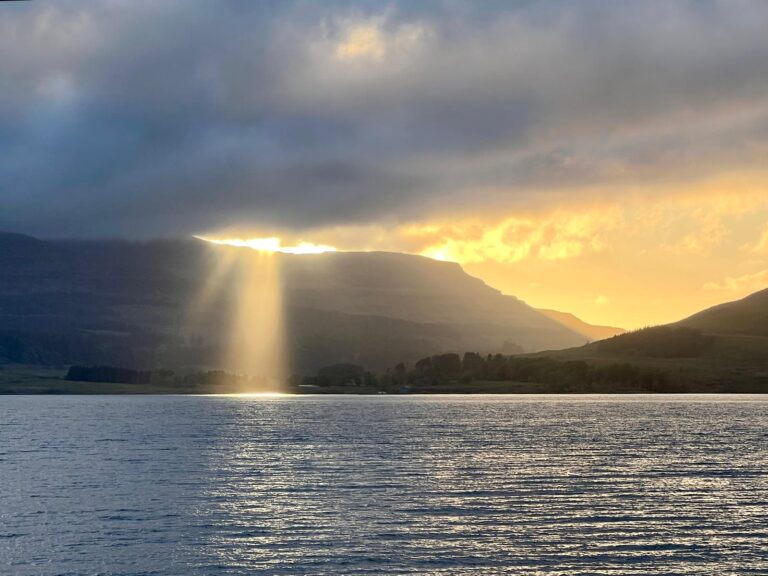
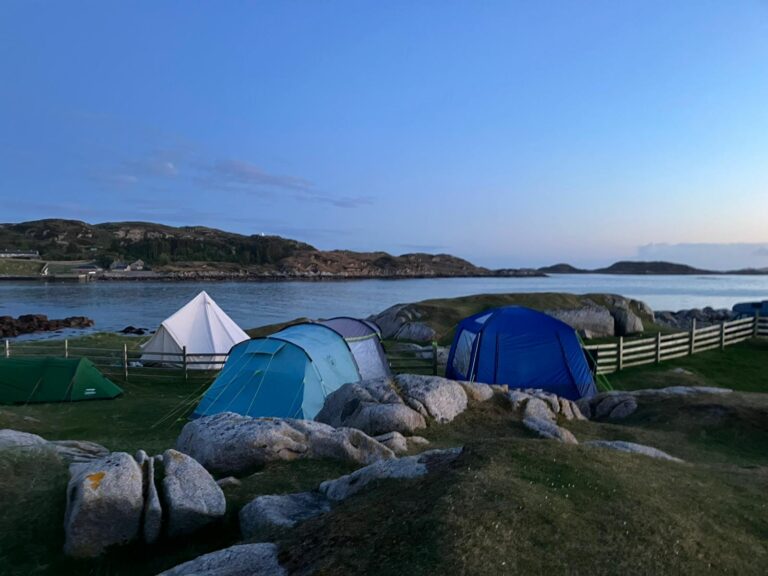
The Isle of Mull is a long way from London and a long way from anywhere. But it wasn’t always that way. Just across the water from the island’s western tip, where CKC pitched camp for a stormy week in May, lies Iona and its abbey, where, if Wikipedia is to be believed, 60 Scottish, Irish, and Norwegian kings lie buried. They and their followers would think nothing about nipping across the Irish Sea or voyaging down the coast past Cornwall to Brittany and beyond. We were beside the original nautical crossroads.
Our trips weren’t quite on the same scale. My day one saw six of us— Fiona, Jude, Gilly, Liza, David, and yours truly— circumnavigating Iona. It was a long day. Liza organised the trip to keep us clear of rock gardens made hazardous by a spring tide running full bore. She also scheduled not one but two lunch breaks on the Atlantic side of Iona so we could ride the flooding tide north.
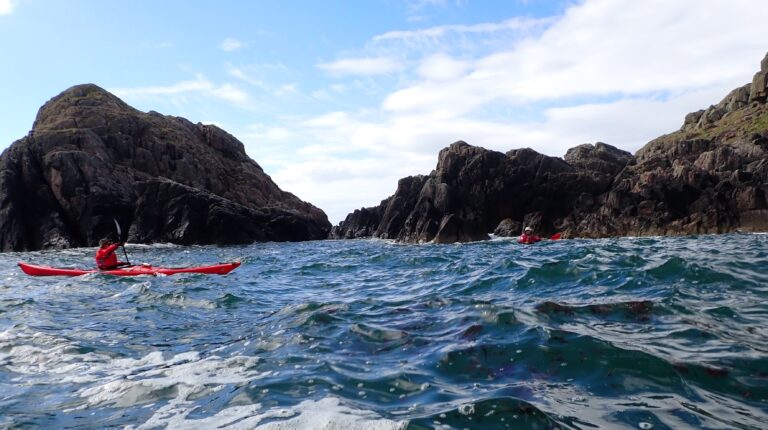
The trip started on the beach at Fidden Farm, our campsite, from where we had a quick hop across the Sound of Iona to the island’s southern tip. There we found ourselves surrounded by white bubbles that stretched in every direction, making the sea resemble an infusion of bath salts.
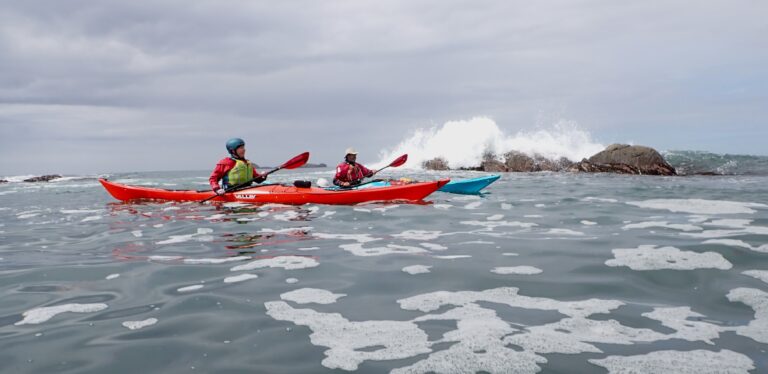
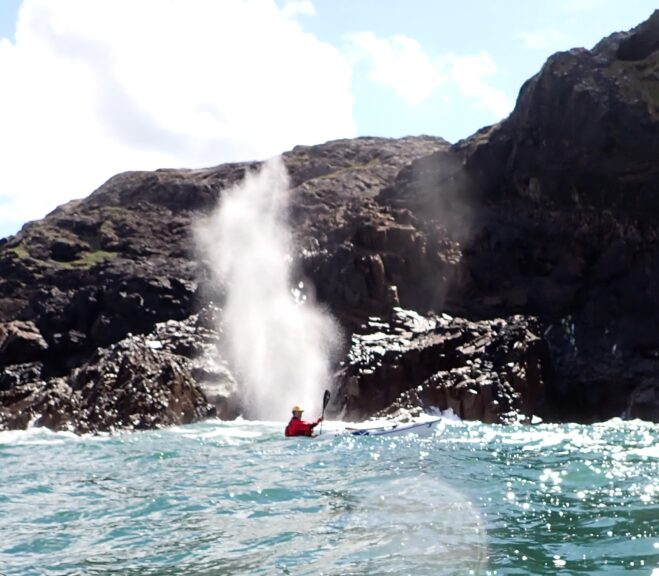
Back on the mainland side of Iona, near the jetty where tour boats were disembarking passengers from the ship anchored offshore, lunch breaks were followed by an ice cream break. With the wind picking up, there was no time to visit the Abbey, the island’s main attraction. Instead, we headed back across the sound to our campsite, passing the Waverley, the world’s last surviving seagoing paddle steamer. Later, we learned it had just been used to ferry passengers back to Oban after the notoriously unreliable Caledonian MacBrayne ferry had broken down.
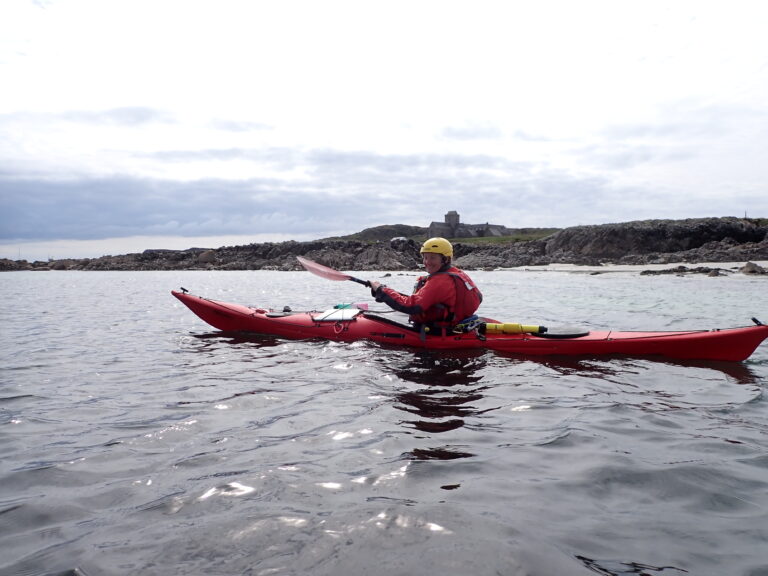
The next day on the water we had greater delights when Fiona bought a crab from a fisherman. She decided a spell in the campsite freezer was the humane way to despatch Claude (clawed— get it?). That was the easy part. She then had to persuade two American visitors there was nothing unusual to be seen in the freezer where they had left their food.
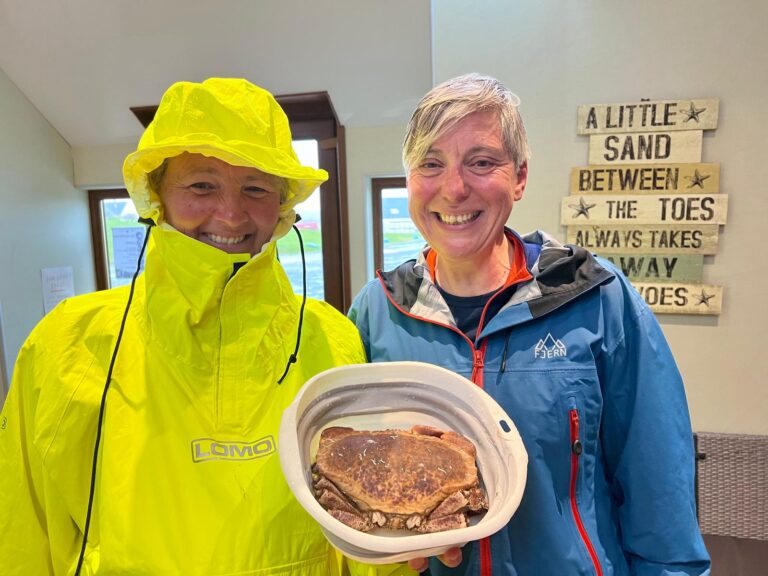
When Claude was judged sufficiently chilled, into the pot he went. Then it was over to Jude, who proved ruthlessly efficient at dismantling crabs. David and Liza had thoughtfully brought a large pop-up tent for use as a group shelter, and, wrapped in woolly hats, anoraks, and every last stitch of clothing, we all huddled beneath it and tucked into crabmeat.
The spectre at the feast was the weather. We had rain by the bucketful; gales meant the group tent had to be twice taken down; the temperature dropped overnight to just five degrees sending Jude and Fiona for emergency purchases of locally woven blankets; and we all became weather junkies, glued to our weather apps.
When the wind was too strong for kayaking, we put on hiking boots and headed for Burg, the massive headland across the sea loch. We didn’t even attempt the 1,400ft climb, but it was to be my toughest day. The plan was to follow the coast to a geological shrine: a 50-million-year-old fossilised tree, preserved in lava flows and first recorded over two centuries ago.
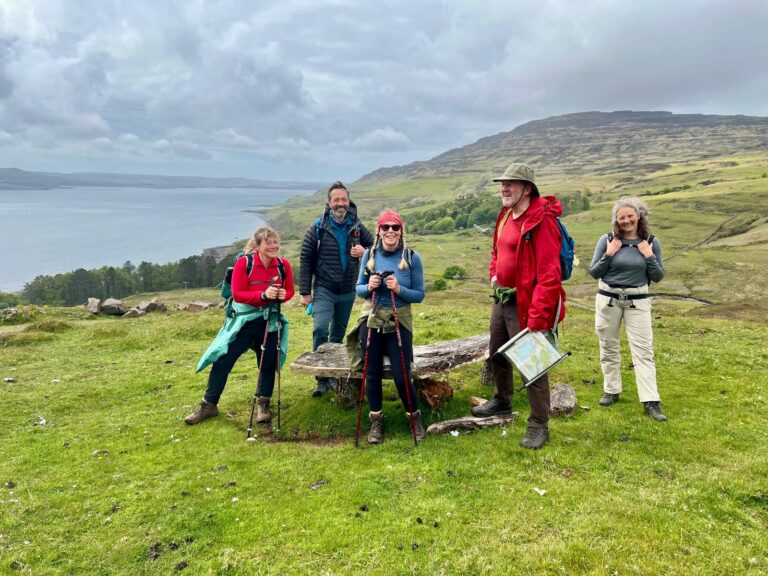
The start was deceptively gentle – a forestry track leading through an avenue of contorted beech trees. But track turned into path, path became a rocky scramble, then we were faced with a climb down a shiny steel ladder bolted to the rock face. After that everyone had to pick their own way for the final half-mile along the boulder-strewn shore. That was when Gilly and I decided it was time to sit back and enjoy the sights while the others pressed on.
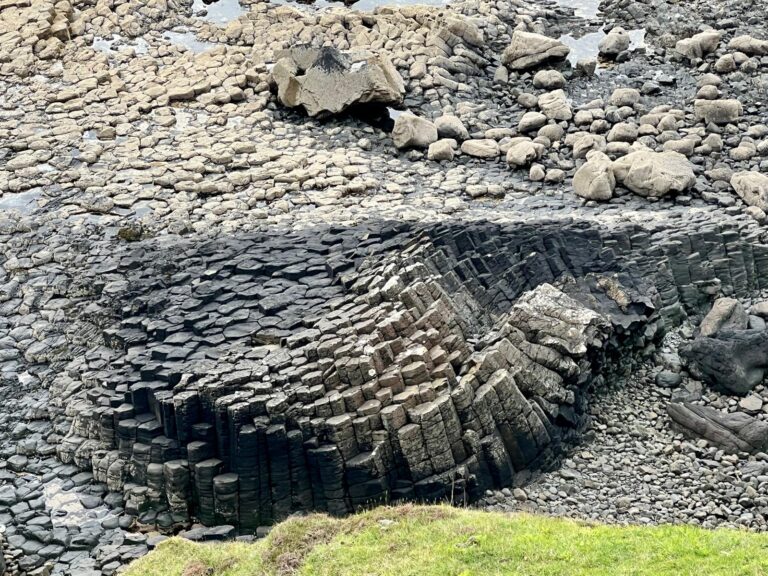
I’m glad we did. The basalt rock formations, which had been caused by violent eruptions, had settled into strange and wonderful shapes leaving a giant wheel that might have been a druids’ altar; sharply cut columns fit to grace a palace; and more columns fanning out like hands in prayer. They weren’t the only spectacles – I was delighted to see a pair of ravens patrolling the cliffs (and envious of Fiona, who claimed an eagle).
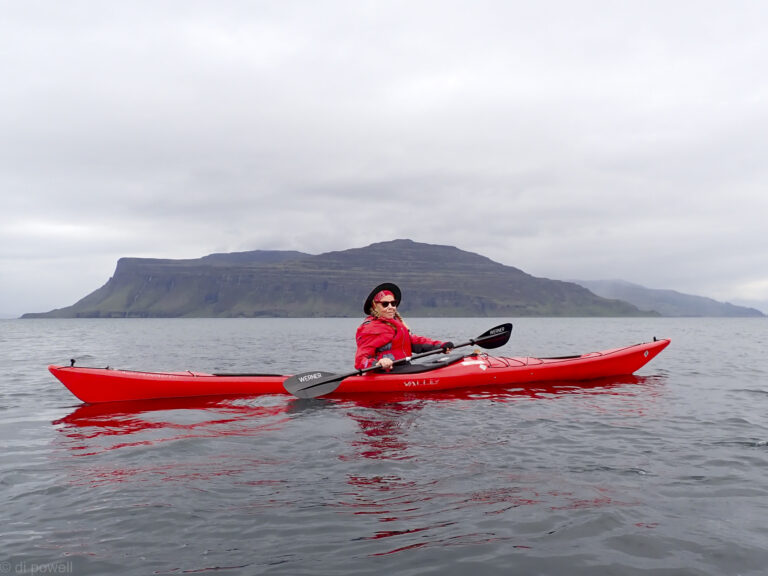
The next day was to be our last on the water, and we had the odd experience of admiring the entirety of our walk from a distance. There was nothing to make it look difficult. But then the same could have been said of that day’s paddling. A sheltered coast with hardly any tidal flow meant we could relax and we had time to admire the huge sea caves made by the waves to boom like giant orchestral instruments.
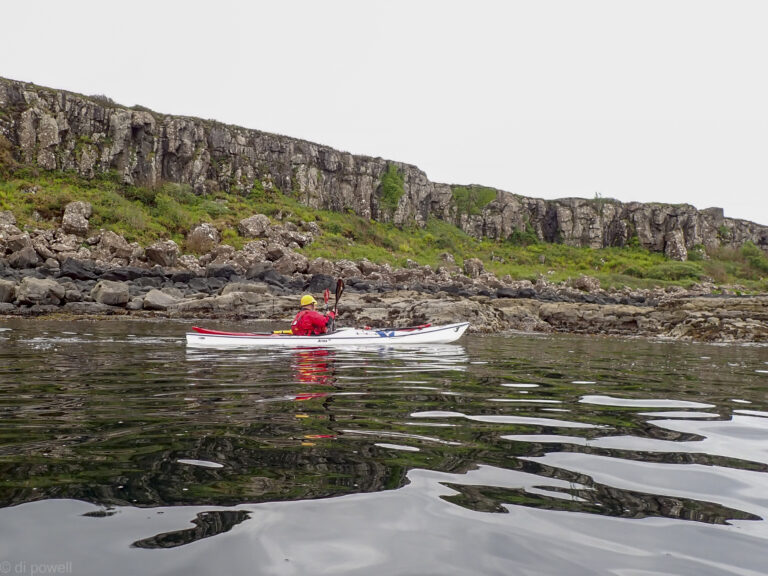
But the caves were a bit too tempting, and David was inspecting one interior when a sudden surge reduced his headroom from yards to just a couple of feet. There was no harm done, but the case for wearing a helmet could hardly have been made more forcefully.
Sod’s Law kicked in when it was time to strike tents and pack up – the rain stopped and the sun came out. Back on the mainland, the further south I drove the more layers I had to strip off. Now I’m writing this from a hot and sticky cauldron.
Give me the wild, wet, and windswept north any day.